
OurSongs: Custom Song Maker
InnovtivMusic & Audio
4.7288.00 Reviews
- Version
- 1.0.13
- Installs
- 500.00K
- Age Rating
- Everyone
Screenshots
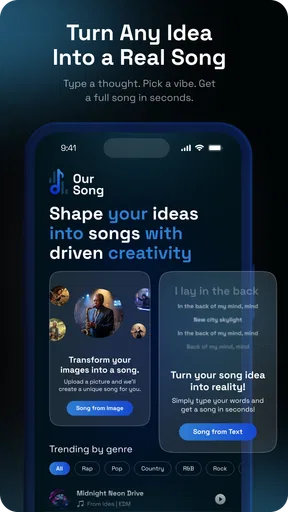
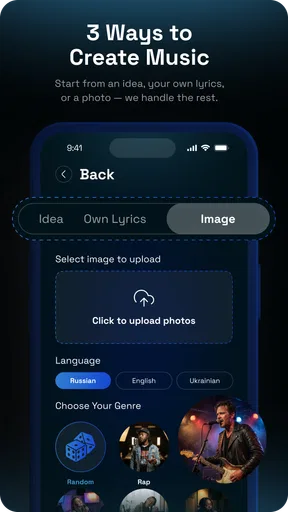
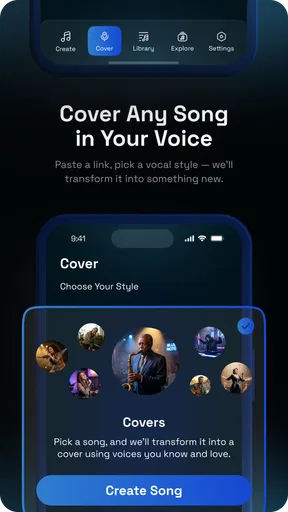
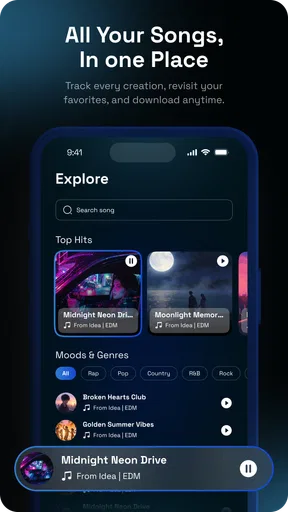
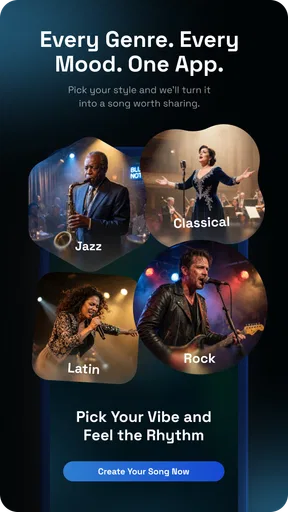
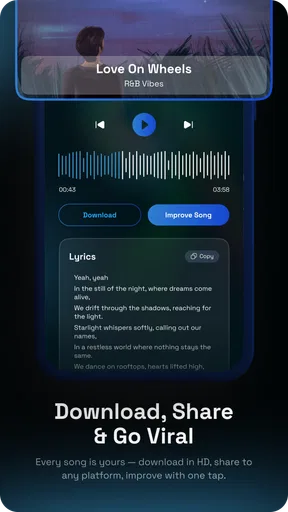
Our Review of OurSongs: Custom Song Maker
 Analysis by Appyee
I found OurSongs: Custom Song Maker interesting because it focuses on a very specific kind of music-making: turning a personal story into a song that can be given to someone else. That makes it less like a traditional music player and more like a creative gift tool. I approached it with a simple question: can it help me create something heartfelt without making the process feel complicated or exposing more personal information than necessary?
In my experience, the answer depends heavily on how much control you want. If you enjoy the idea of describing a memory, relationship, celebration, or private joke and receiving a personalized musical result, this app has an appealing purpose. If you want to compose every melody, edit individual instruments, or work inside a full recording studio, it is probably not the right fit. The important distinction is that OurSongs is built around transforming a story, not teaching traditional songwriting.
What the app feels like when you use it
OurSongs sits in the Music & Audio category and is developed by Innovtiv. It is free to install, with in-app purchases ranging from $9.99 to $79.99 per item. That pricing structure immediately changes how I would approach it: I would explore the creative process first, understand what can be made without paying, and only then decide whether a finished song is meaningful enough to justify a purchase.
The store summary presents the app as a way to turn a story into a custom, personalized song. In practical terms, that means the quality of your input matters. A vague request such as “make a romantic song” gives the creative system very little to work with. A better starting point is a short, organized story with the person’s name, the occasion, a few specific memories, the mood you want, and the kind of emotional ending you imagine.
That is my first useful tip: write the story before opening the song maker. I would prepare a version that is personal but not unnecessarily revealing. Instead of including a full address, workplace details, phone number, or private family information, I would describe the shared moment itself. “We got caught in the rain after our first dinner and laughed all the way home” is more useful creatively than a long paragraph filled with identifying details.
The app’s appeal is strongest when the recipient values thoughtfulness more than technical perfection. A custom song made for a birthday, anniversary, wedding-related gift, friendship milestone, or family memory can feel more personal than selecting a standard track from a streaming service. At the same time, the result should be treated as a creative interpretation, not as a replacement for a professionally recorded song written and produced by a human team.
Trust starts with what you choose to enter
Because the central input is a personal story, I would pay closer attention to my own choices here than I would with an ordinary audio app. The most sensitive moment is not listening to music; it is deciding what details belong in the prompt. The app’s purpose encourages emotional sharing, but emotional does not have to mean exhaustive.
I would keep the story focused on the intended recipient and the event. If the song is about a couple, I might include their first names or nicknames, an important place described generally, and two or three memories. I would avoid copying private conversations, medical information, financial details, or anything involving another person who has not agreed to have their story used. This approach still gives the app meaningful material while reducing unnecessary exposure.
There is also a practical reason to avoid overloading the request. Too many facts can make a song feel like a list of references rather than a coherent message. I get better creative direction from a small set of memorable details: one setting, one shared habit, one emotional turning point, and one clear message for the recipient. This is a non-obvious trade-off with personalized generation: more information is not automatically better information.
I would also read each screen carefully before submitting a story or confirming a purchase. In a personalized-content app, visible choices matter. I want to know what text is being submitted, whether the app asks me to sign in, what I am paying for, and whether I can review the result before committing to a larger purchase. I would not assume that a free installation means every part of the creation process is free.
Controls and account decisions worth checking
OurSongs is marked for Everyone, which makes it approachable for a broad audience, but an age label should not replace careful supervision of personal sharing. A young user creating a song about friends or family may still include names, locations, or private stories without realizing how sensitive those details can be. I would guide younger users toward fictionalized or simplified descriptions and review any purchase screen together.
The current version is 1.0.13, and the minimum operating system is Android 8.0. Those details make the app accessible to many older Android devices, although compatibility is still something I would check on the particular phone before planning an important gift. I would not wait until the day of a birthday or celebration to create the final version. A personalized result may require time for revisions, downloading, or simply deciding whether the tone feels right.
One question many people will have is whether they need an account. I would look at the opening screens and the point where a song is saved or purchased, because account requirements can affect privacy and convenience. If an account is requested, I would use only the information necessary for that account and avoid reusing a password from an important service. I would also check whether the app offers any visible sign-out, deletion, or account-management control before storing personal creative work there.
Another sensible check concerns the story after creation. I would look for any visible options to remove a draft, clear entered text, or manage saved songs. I cannot treat a control as present unless it is actually shown in the app, so my advice is straightforward: inspect the settings and creation screens yourself rather than assuming that a personal story disappears automatically after a song is generated.
This is where I think the app asks for a little more attention than a conventional music player. With a streaming app, I mainly think about playlists and playback. With OurSongs, I also think about the life cycle of the material I provide: what I type, what I save, what I share, and what I keep on my device. That does not make the app untrustworthy; it simply means the user has a more active role in protecting the information behind the music.
A realistic gift-making workflow
Imagine I want to create a song for a close friend’s birthday. I would begin by writing a compact brief: how we met, one funny memory, a quality I appreciate, and the feeling I want the song to leave behind. I would choose a tone that matches the person rather than automatically selecting something dramatic. A quiet, warm result may suit a reserved friend better than an oversized celebration anthem.
Before submitting it, I would remove details that are funny only because they are private or embarrassing. The recipient may enjoy the reference, but a song can be replayed or shared, so I would ask myself whether I would be comfortable with the lyrics being heard by other people. This is one of the most important practical differences between writing a private message and generating a musical gift.
After receiving the result, I would listen once without judging every line. The first pass tells me whether the overall mood is right. On the second pass, I would check names, dates, relationships, and any detail that could make the gift awkward if interpreted incorrectly. If the result misunderstands the story, I would simplify the prompt instead of adding even more information. Clearer structure usually gives the creative system a better chance of preserving the main idea.
I would also keep a backup of the final audio only after confirming that I am comfortable with the content and the sharing method. If I send it through a messaging app or social network, the privacy of that platform becomes part of the decision. A song intended for one person can easily become public once it is posted to a group or social feed, so I would share the file directly when the message is meant to stay personal.
Where it differs from ordinary music apps
Compared with Spotify, Apple Music, or another streaming service, OurSongs is not mainly about discovering a huge catalog or building a long-term listening habit. Its value comes from originality and occasion. A normal playlist can match a mood, but it cannot naturally include the details of one particular relationship. OurSongs is better when the goal is to make one personalized object rather than find the perfect existing track.
Compared with a digital audio workstation, it offers a much lighter creative path. A full studio gives me control over recording, arrangement, effects, timing, vocal takes, and mixing. That control is valuable if I already know how to produce music or want to refine every part of a composition. The trade-off is time and complexity. OurSongs is more attractive when I have a story and an emotional goal but no interest in learning a complete production workflow.
It also differs from hiring a songwriter or musician. A professional can ask follow-up questions, interpret subtle context, and revise the work collaboratively. That option may be better for a wedding performance, a public release, or a gift where every lyric must be exact. OurSongs makes more sense for a personal surprise where the charm comes partly from the unusual idea of turning a shared memory into a song.
One of the app’s less obvious limitations is that personalization can create high expectations. When a song includes a person’s name or a meaningful event, small mistakes feel more noticeable than they would in a generic track. I would therefore avoid presenting the result as flawless or deeply autobiographical. I would frame it as a creative keepsake inspired by the story I supplied.
Who should use it, and who should skip it
I would recommend trying OurSongs if you regularly struggle to find an original gift, enjoy sentimental projects, or want to express a memory in a format that feels more memorable than a written card. It may also suit someone who has ideas for lyrics but does not have the confidence or equipment to make a complete song independently.
I would be more cautious if you need strict control over wording, musical structure, vocal delivery, or production quality. I would also skip it for professional releases, commercial campaigns, or situations where a song must accurately represent several people’s experiences. In those cases, a human songwriter, recording service, or conventional audio editor would give me clearer control and a more reliable revision process.
People who are especially sensitive about entering personal information should use the app with a minimal-story approach. The creative result does not require every private detail. I would describe the emotional shape of the memory while leaving out information that could identify someone, reveal a private circumstance, or create trouble if the text were stored or shared.
The free price makes experimentation easier, but the paid items mean I would still approach the app as a purchase decision rather than an unlimited free tool. The rating is a 4.7 average from around 3.2 thousand ratings, and the app has passed half a million installs, which suggests meaningful interest from Android users. Those figures make it worth exploring, but they do not tell me whether a particular generated song will suit my story. The best test remains a small, low-risk project.
My verdict after weighing the creative and privacy trade-offs
OurSongs: Custom Song Maker has a clear identity. It is not trying to replace a streaming catalog or become a professional studio. Its strongest use is turning a carefully chosen personal memory into a musical gift with relatively little technical effort. I like that concept because it gives ordinary users a way to make something distinctive without needing to play an instrument or understand production software.
My main recommendation is to treat the story box as a deliberate creative and privacy boundary. Enter only what the song needs, organize the details before submitting them, and review every result for accuracy and tone. I would also inspect visible account, deletion, sharing, and purchase controls on my own device before committing sensitive material or money. User agency matters most when the app is built around personal stories.
The app is a good match for a thoughtful birthday surprise, a private anniversary gesture, or a playful song based on a shared memory. It is a weaker choice when the recipient expects studio-level polish, exact wording, or a formal performance piece. For me, that balanced expectation is the key to enjoying it: use it for emotional originality, not technical perfection.
With its Everyone content rating, support for Android 8.0 and later, free installation, and paid creative options, it is easy to approach as an experiment. I would start with a simple story, avoid sensitive details, listen critically, and decide whether the finished song genuinely feels like the person it is meant for. If it does, OurSongs can turn a familiar memory into a surprisingly personal gift. If it does not, I would move to a human songwriter or audio editor rather than forcing the app to do a job it was not designed to handle.
Verdict
Strengths of OurSongs: Custom Song Maker
- Simple interface makes creating custom songs quick for beginners.
- Offers creative freedom for personalized lyrics and song concepts.
- Useful for making songs for birthdays, gifts, and special occasions.
- Projects can be adjusted without needing advanced music-production skills.
- Fun tool for experimenting with different songwriting ideas.
Limitations of OurSongs: Custom Song Maker
- Song quality depends heavily on the prompts and ideas you provide.
- Advanced users may find editing and arrangement options limited.
- Some features or content may require in-app purchases.
- Generated results may occasionally sound repetitive or generic.
- An internet connection may be needed for some creation features.
Similar Picks in This Category
View All
YouTube Music
Google LLC4.4

Samsung Music
Samsung Electronics Co., Ltd.3.8

Spotify: Music and Podcasts
Spotify AB4.3

JioSaavn - Music & Podcasts
Saavn Media Limited4.3

Lark Player:Music Player & MP3
Lark Player Studio - Music, MP3 & Video Player4.6

StarMaker: Sing Karaoke Songs
SKYWORK AI PTE. LTD.4.3
Frequently Asked Questions
What is OurSongs: Custom Song Maker?
OurSongs: Custom Song Maker is a creative music-making app designed for users who want to turn personal ideas, memories, messages, or special occasions into original songs. After exploring its main tools, the app appears focused on simplifying the songwriting process, making it accessible even if you have no formal musical training or experience with recording and production software.
How does OurSongs create a custom song?
The process generally begins with providing a theme, story, message, or other details that describe the song you want. You may then be able to select or influence elements such as mood, style, occasion, and vocal direction before generating the result. The available customization can depend on the app version, account type, and selected features, so reviewing the on-screen options before submitting a request is recommended.
Can I use OurSongs songs for personal or commercial purposes?
Before using a generated song in advertising, videos, social media campaigns, business projects, or other commercial content, carefully check OurSongs’ current licensing terms. Ownership, usage rights, attribution requirements, and restrictions may differ depending on how the song was created and whether a free or paid plan was used. Personal sharing may be allowed, but commercial rights should never be assumed.
Is OurSongs: Custom Song Maker free to download and use?
The application may be available to download without an upfront charge, but some features can require in-app purchases, credits, a subscription, or payment for individual song generation. Costs may vary by platform and region. We recommend checking the pricing screen, renewal conditions, included credits, and refund policy before confirming any purchase, especially if you plan to create multiple songs.
What should I know about privacy and the content I submit?
When using a custom song service, you may submit names, personal stories, event details, written lyrics, or other information that could identify you or someone else. Read the privacy policy to understand how this material is stored, processed, and used. Avoid entering highly sensitive information unless necessary, and confirm whether submitted content may be retained for service improvement or account history.
